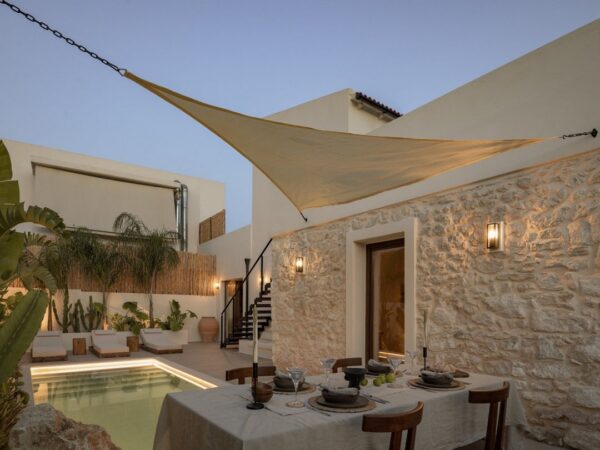
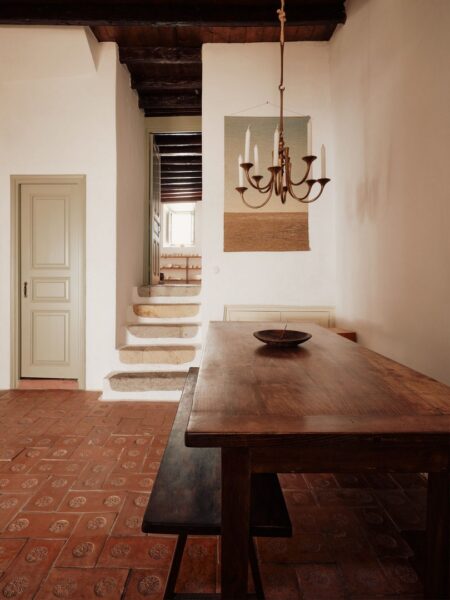
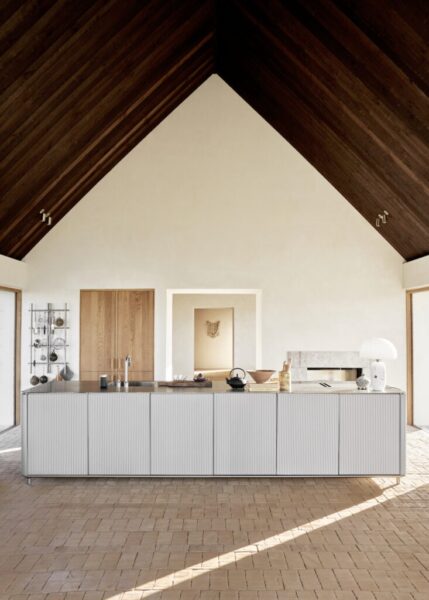
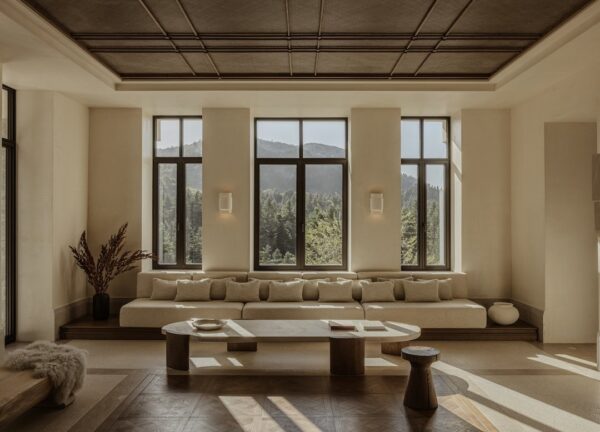
French architect Jean Nouvel converted to Rome the hotel “The Rooms of Rome”, for Fondazione Alda Fendi– Esperimenti in a historical building complex creating an extraordinary synthesis of old and new. It stands on one of the most illustrious places in all history: the Roman Forum, in which The Rooms of Rome is located in the seventeenth century Rhinoceros palace. Over the façades, Jean has kept everything bearing witness to the passage of time… all the better to bring out the different archaeological stratifications. This rule reinforces the sense of how strongly these buildings are moored in history.
The context doesn’t allow substantial changes to be made to the façades, which are listed, but he has been able to rethink the way the surrounding landscapes are framed through the windows and from the terraces. Revisiting the building also meant making use of all the different internal features to create 25 apartments that are all unique. Each apartment also has differently framed views, thanks to the way the windows have been knocked around over the years, with many of them being reduced in size and some even bricked up. The really substantial changes have mainly been made inside.
The touches of modernity that already existed inside the apartments have been accentuated by introducing essential state-of-the-art fit-outs such as kitchens and bathrooms. These pared-back stand-out objects are stainless-steel blocks, providing a striking contrast to the mottled walls, whose patinas are themselves revelations of the different layers of paint and plaster, fractures, and mixed materials.
The fixtures have been fitted in a clean streamlined way so that the strongest possible contrast is set up between these objects of modern living and what remains of the ancient world now accommodating them: sections of original floor tiles have been left untouched but surrounded by new materials, while there are new steel structures for the lintels, the pillars, and stairs – all of these elements now permanently marking out a new layer in the historic sedimentation. It’s a friendly conversation between opposites, a happy confrontation between different eras, from the most remote to the most modern. It’s also a meeting between two worlds, between the traces of the noblest and most sacred architectural monuments of Antiquity.
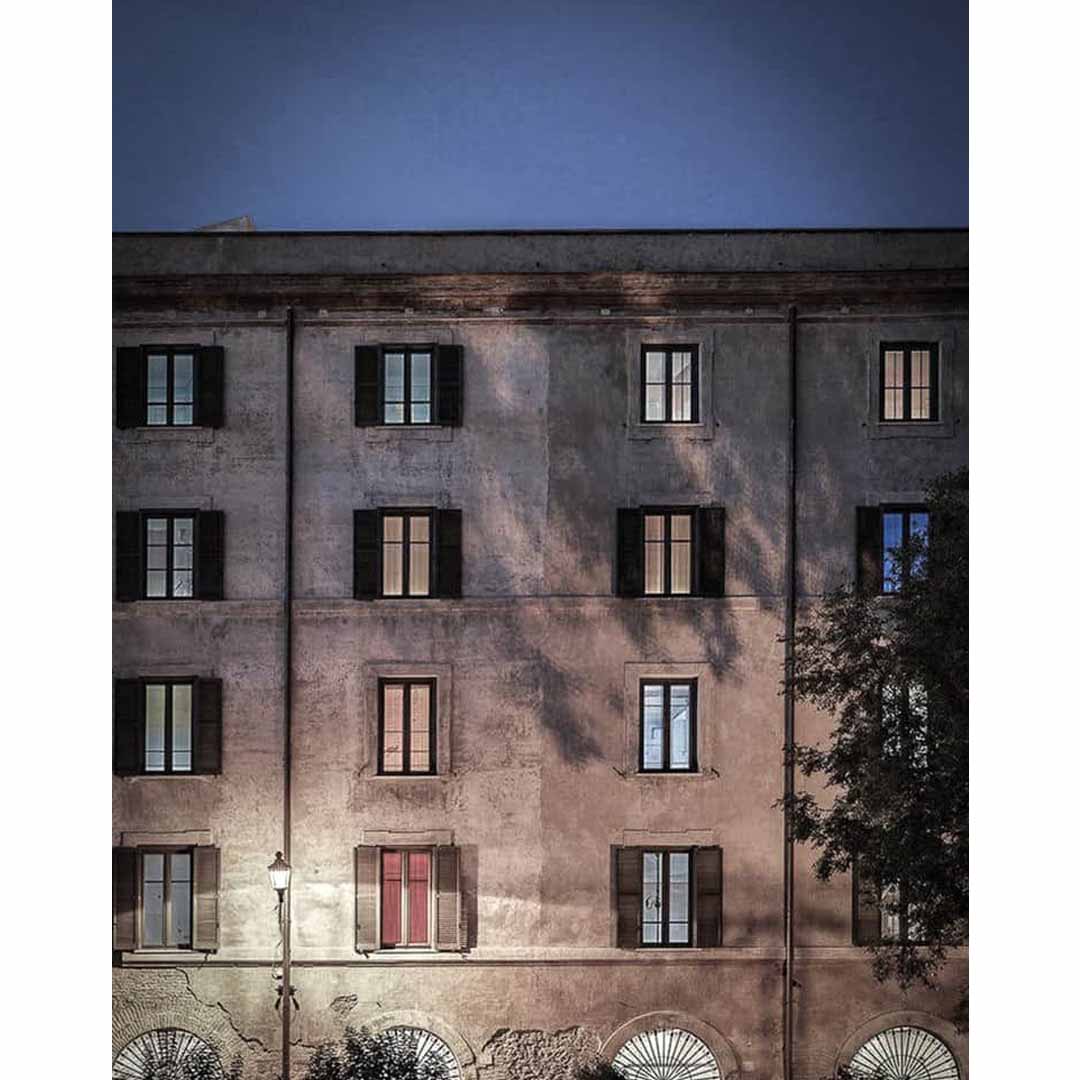
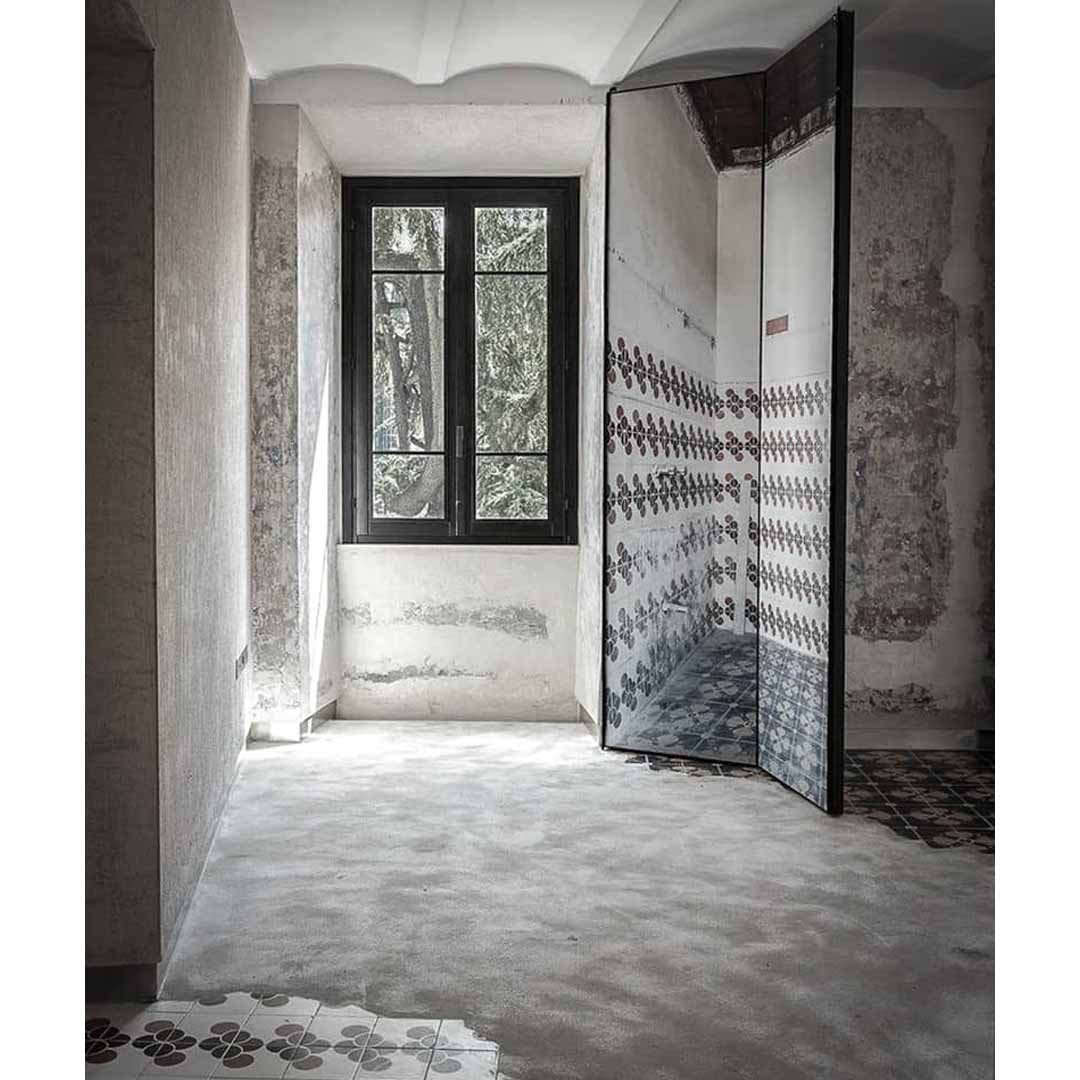
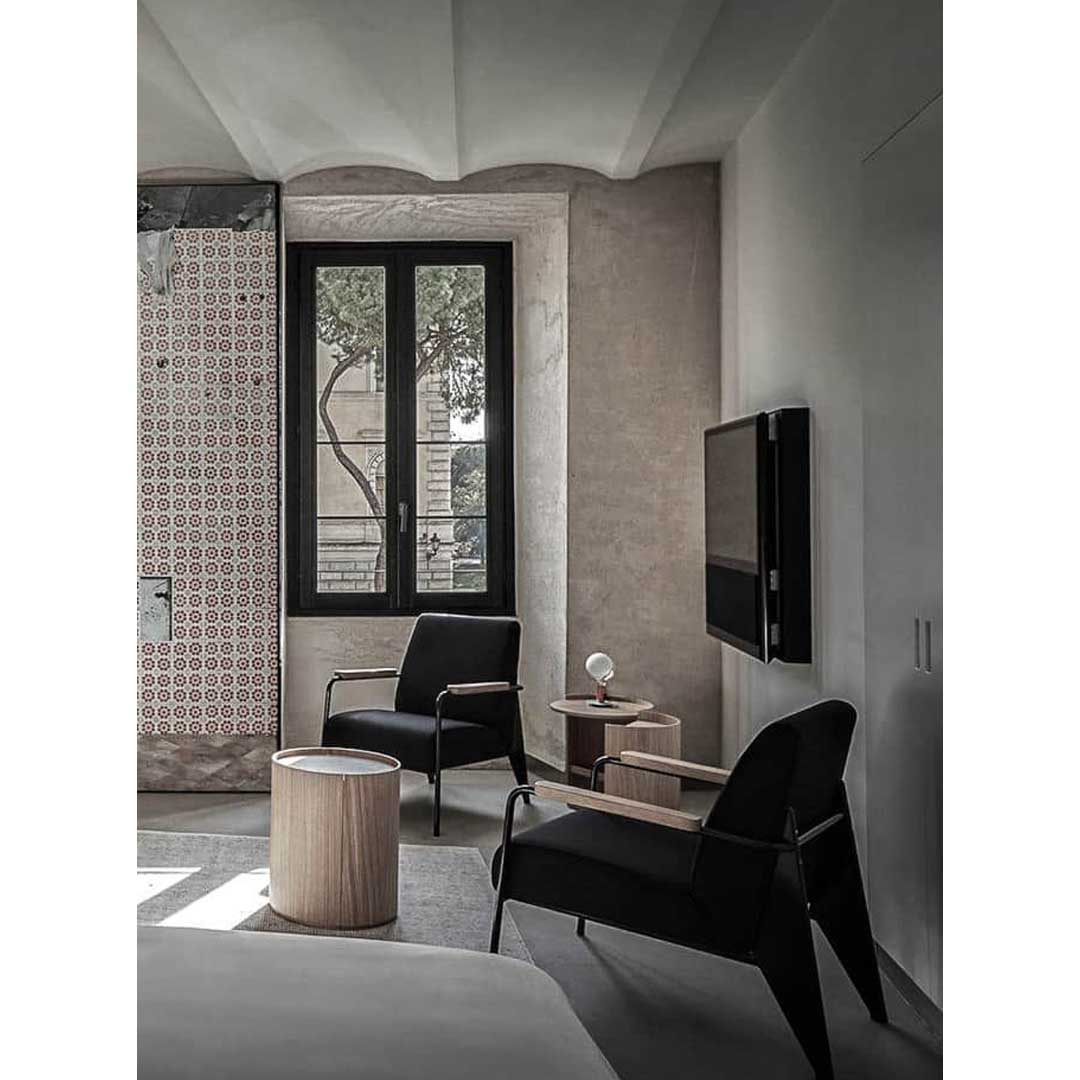
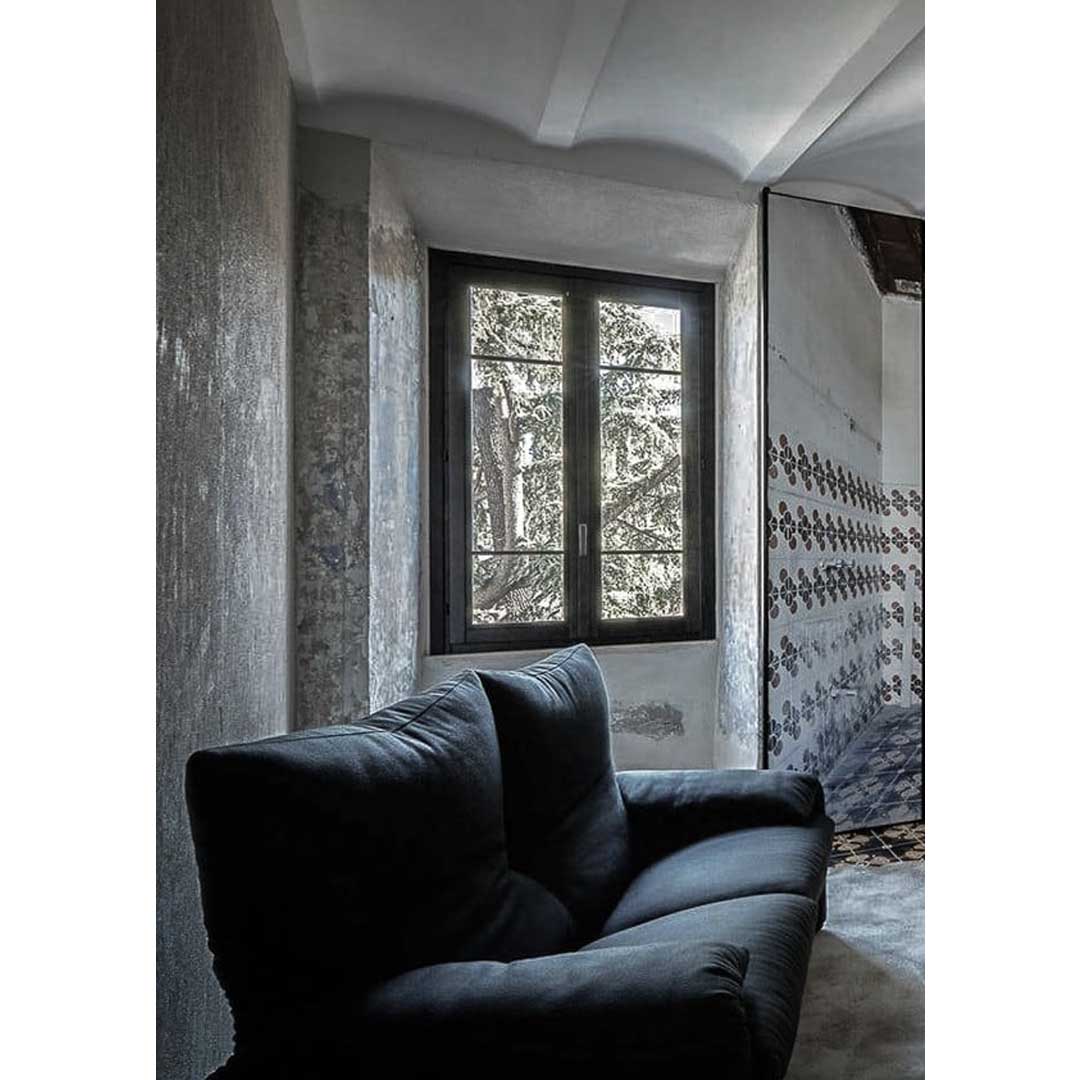
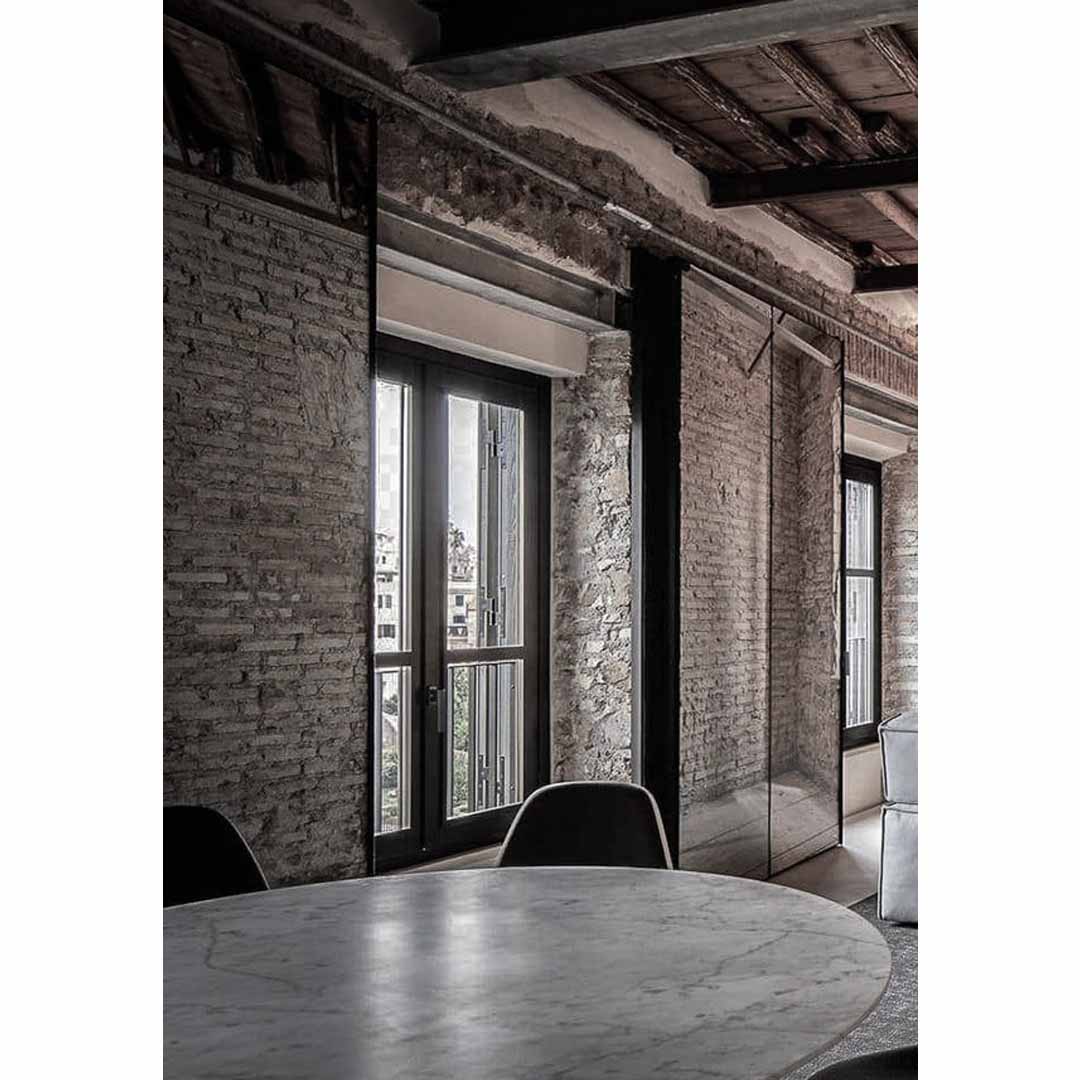
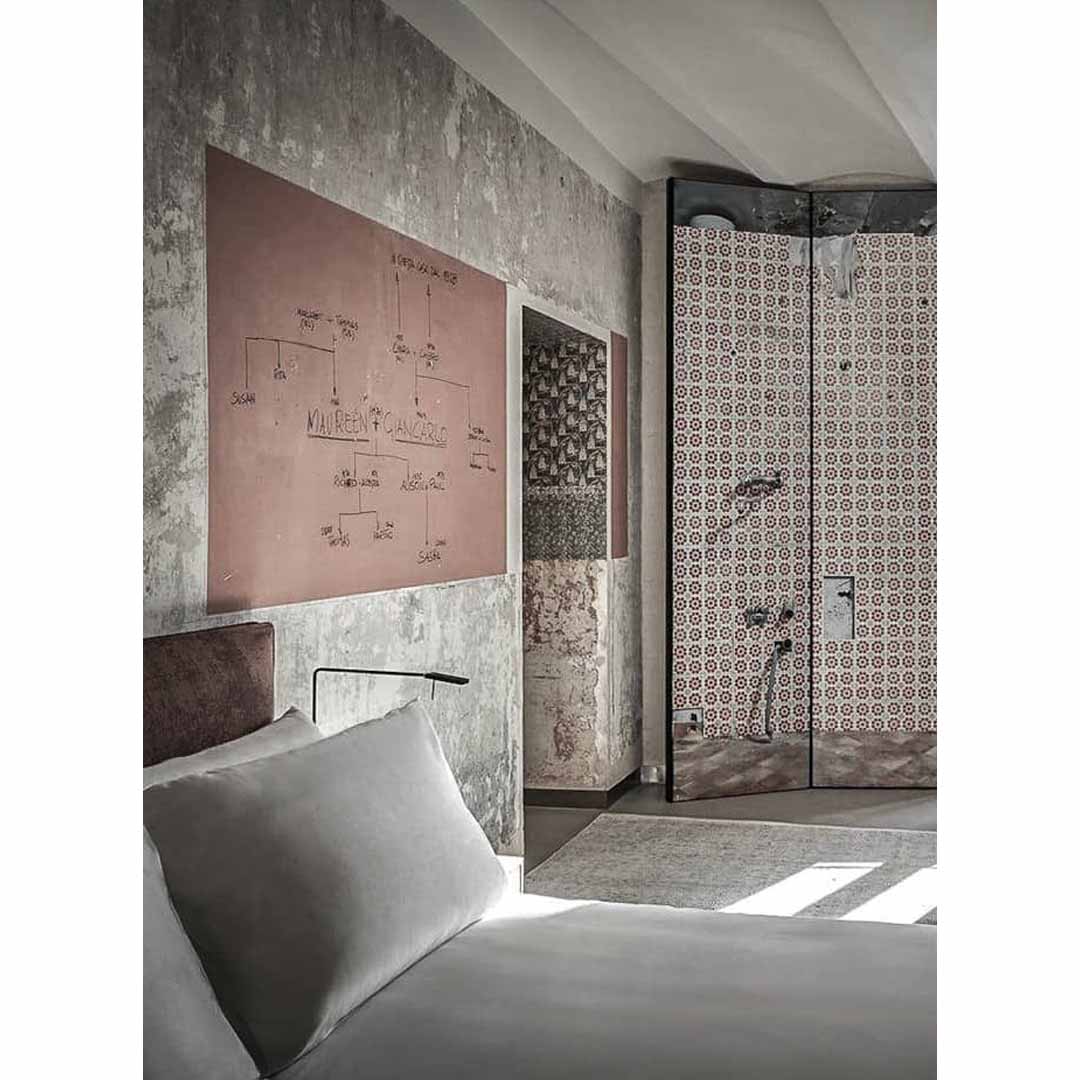
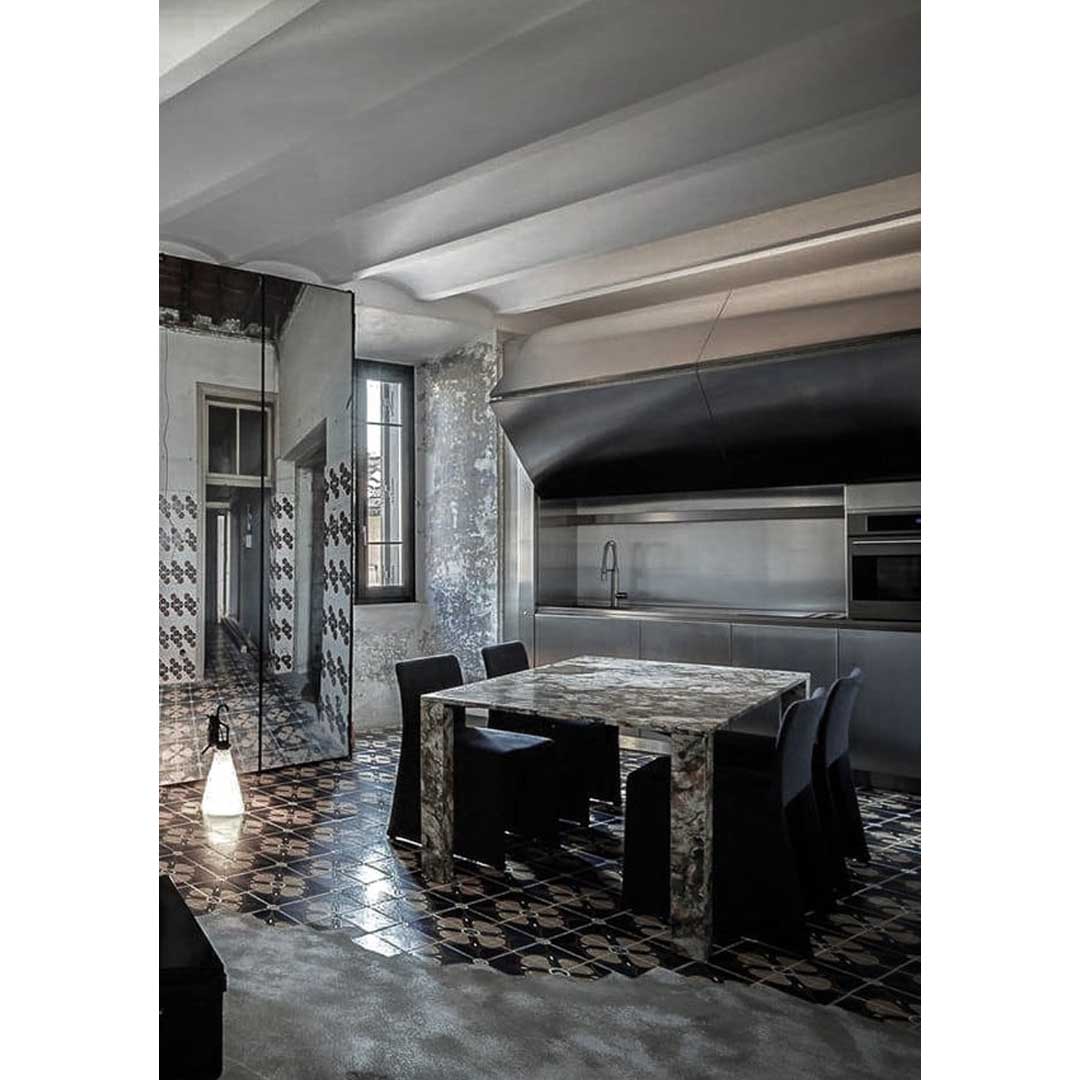
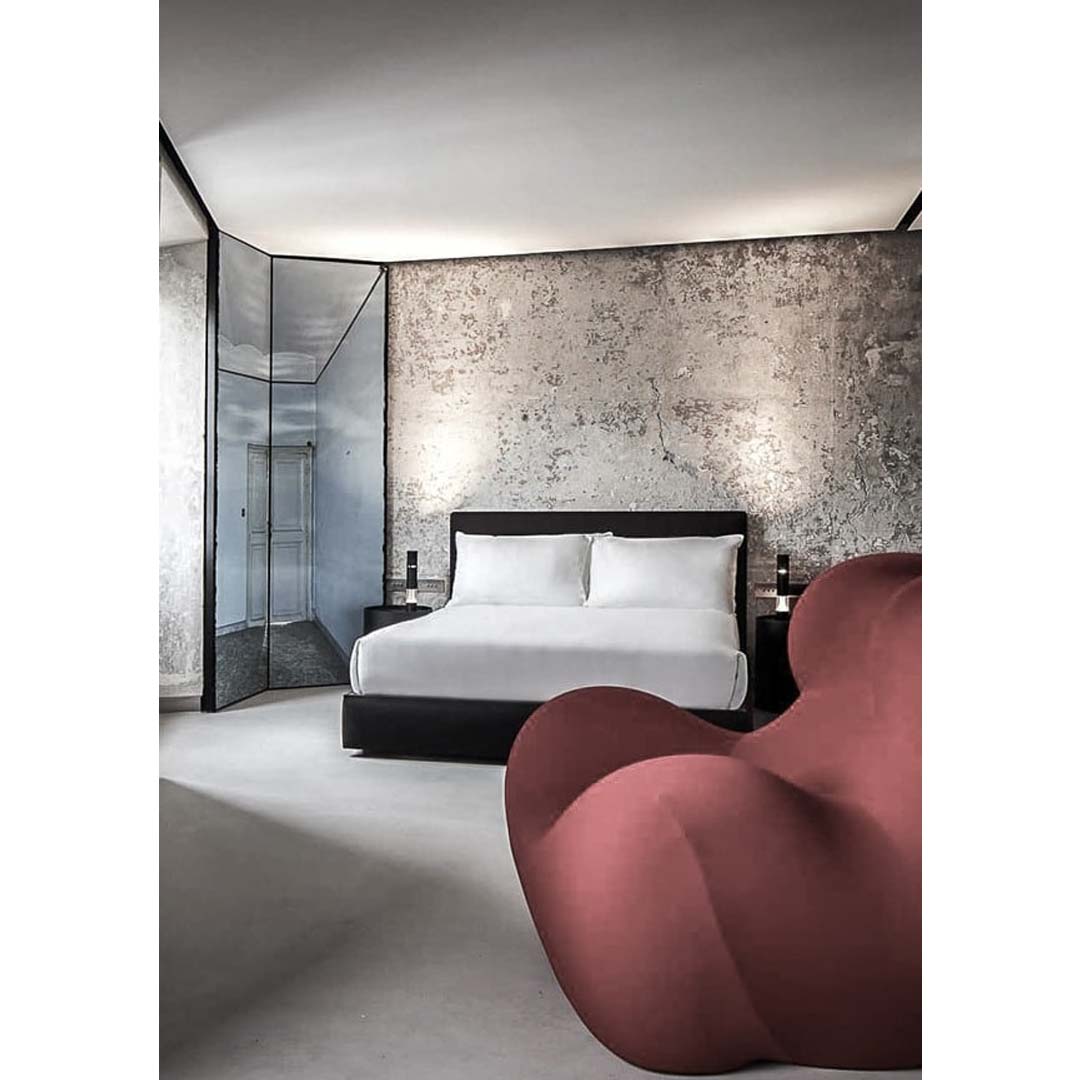
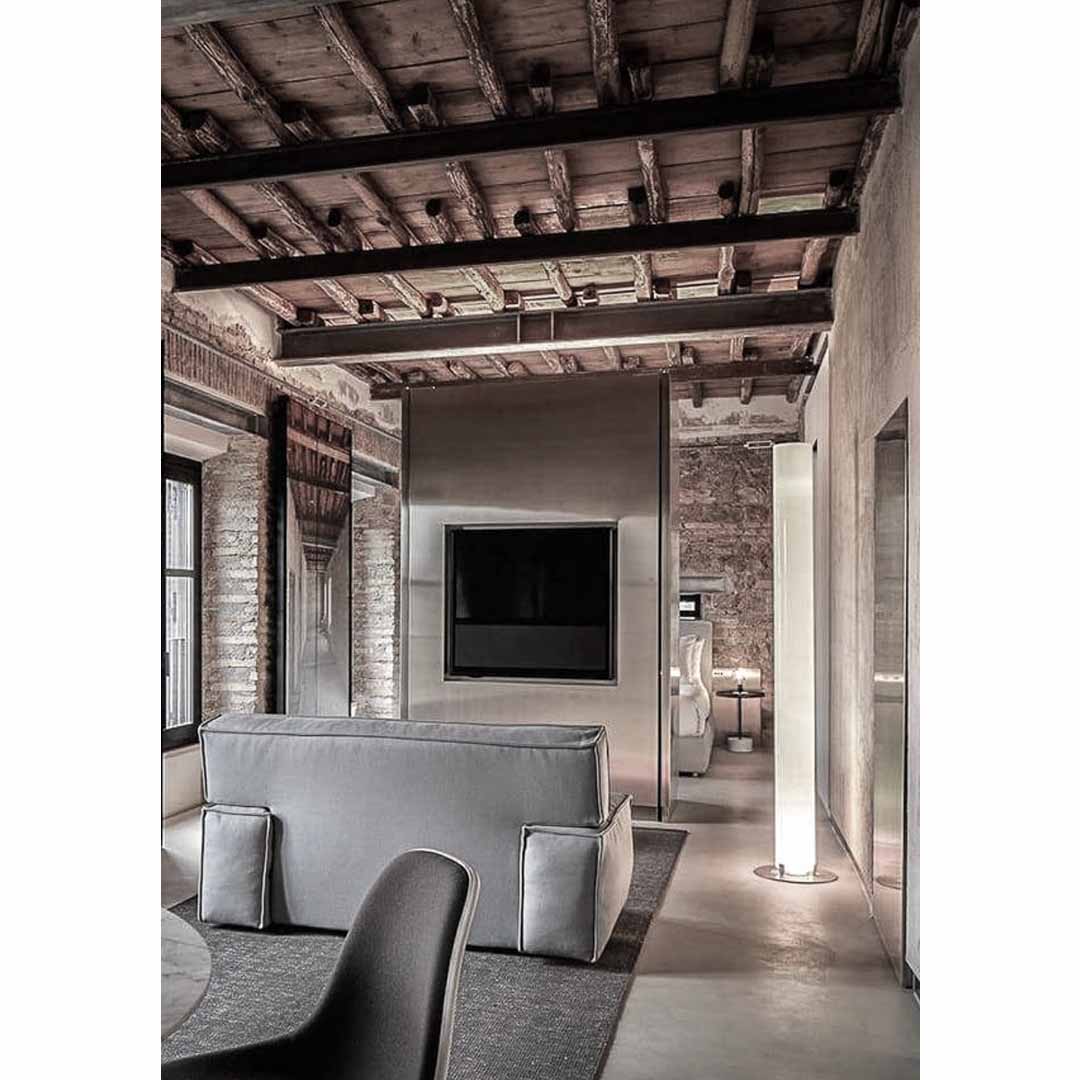
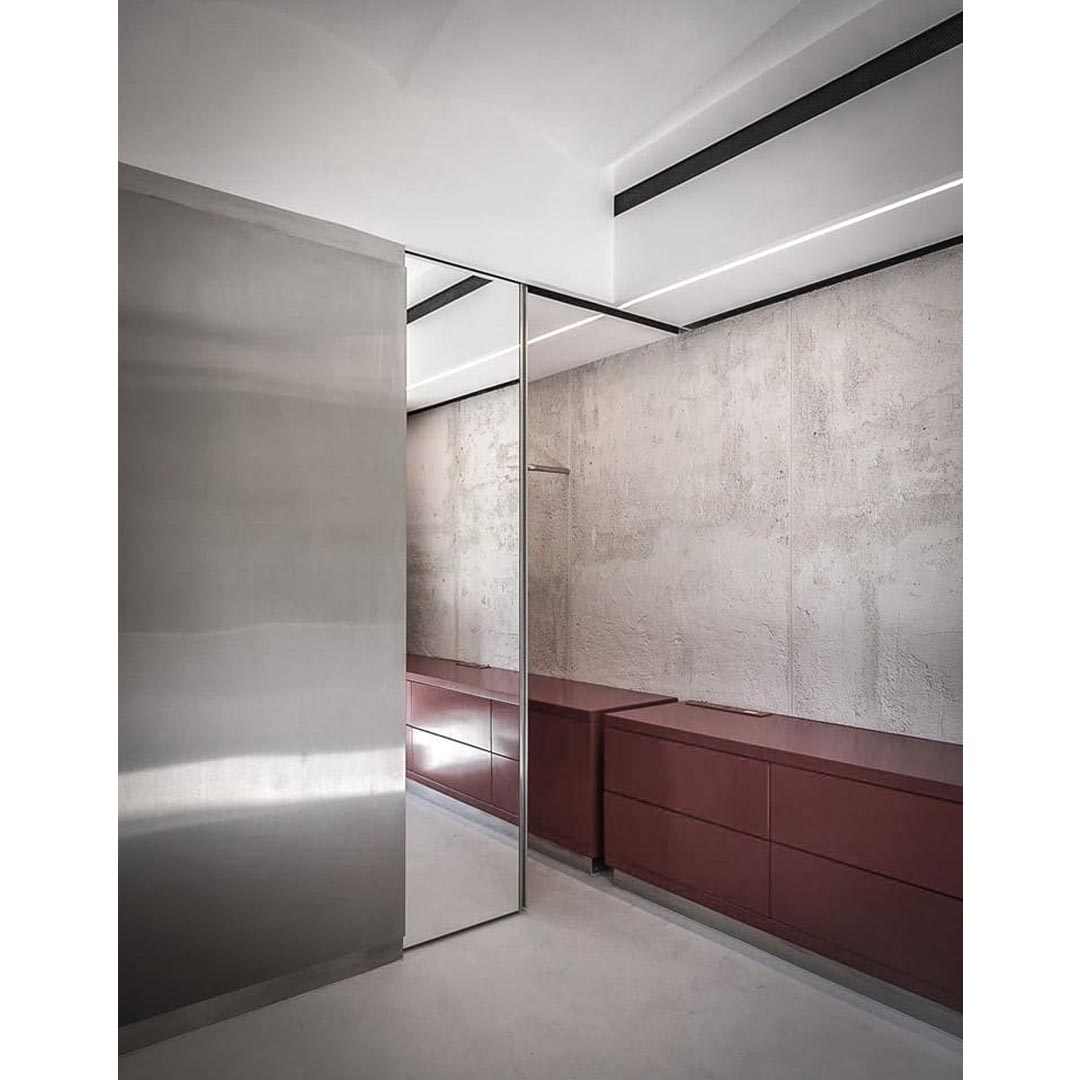
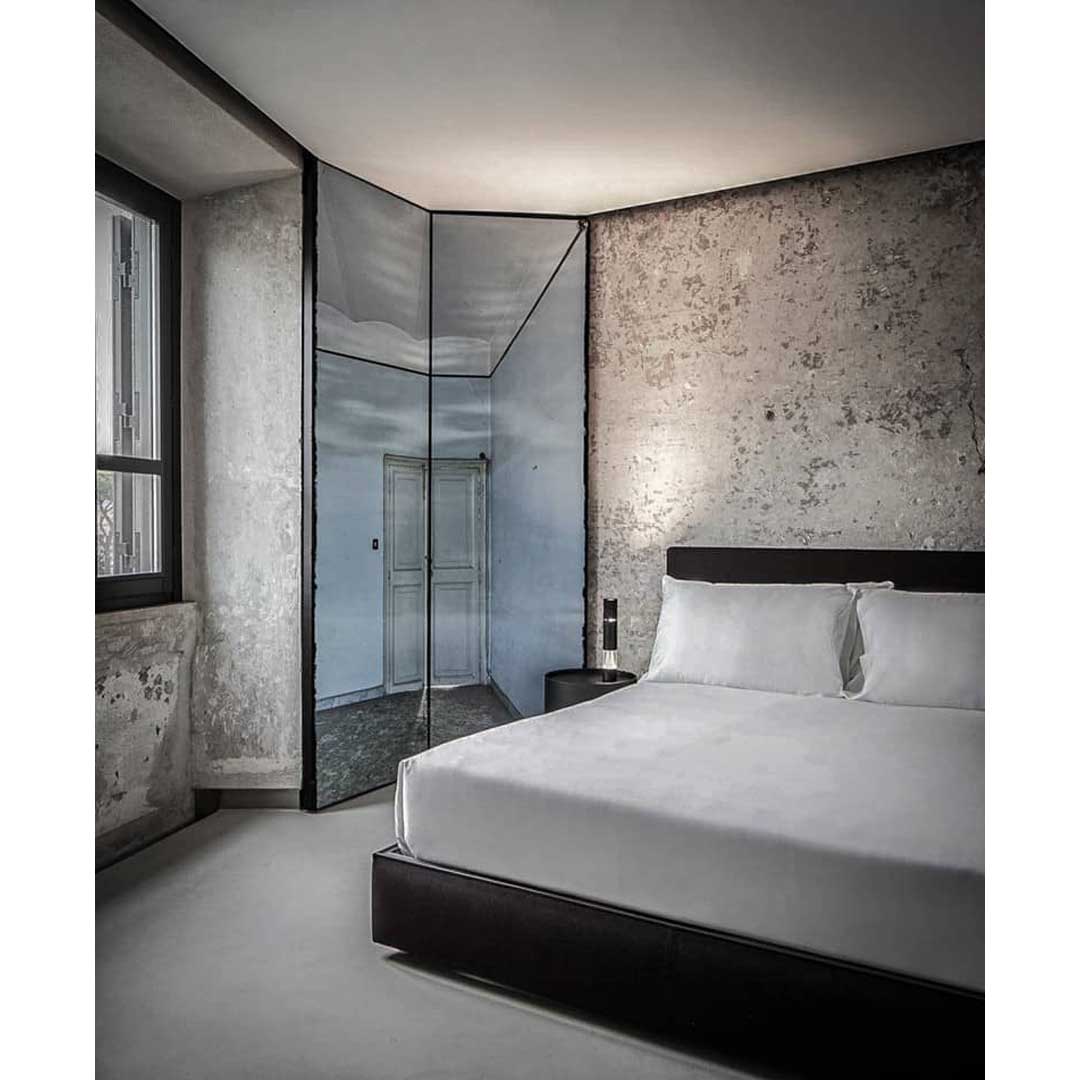
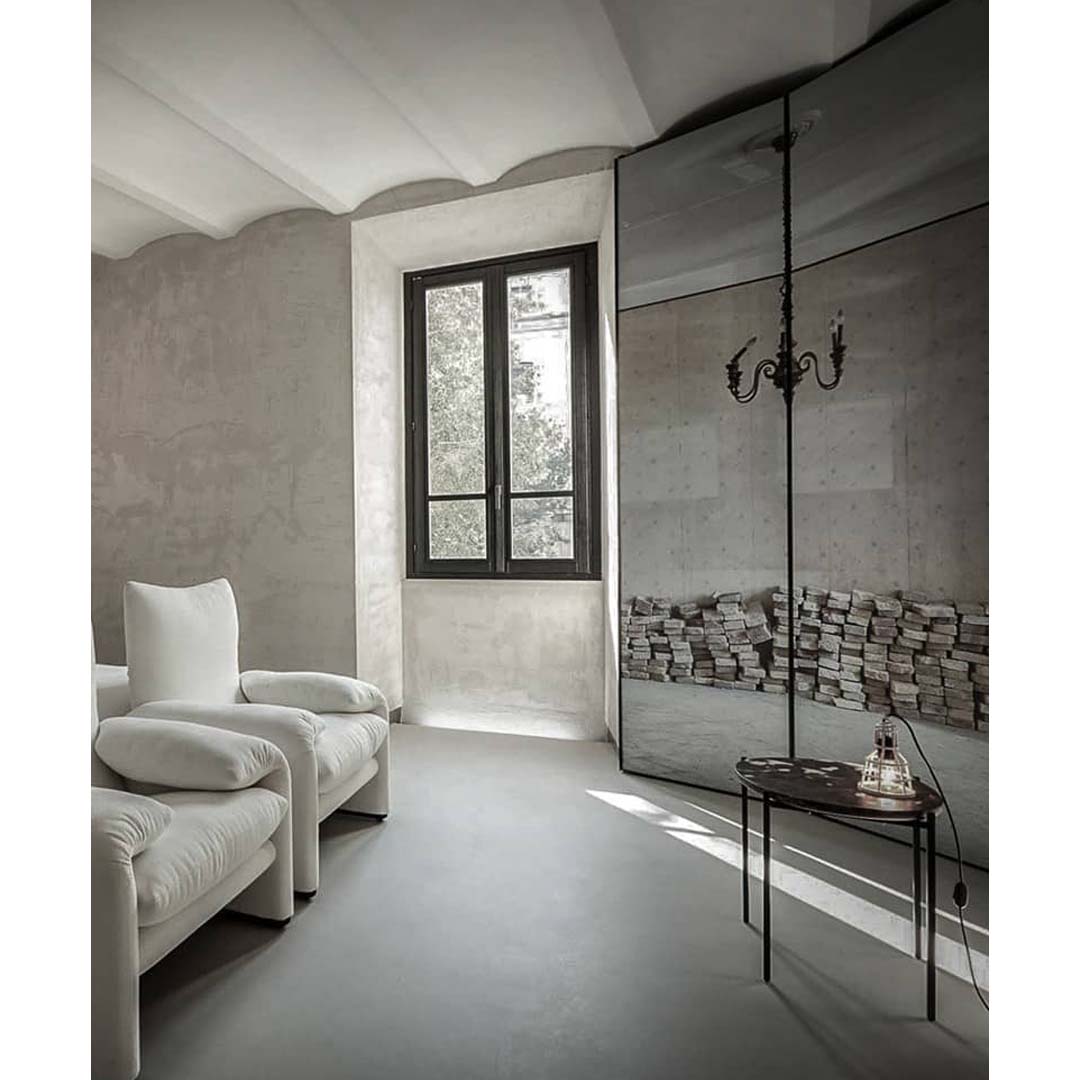
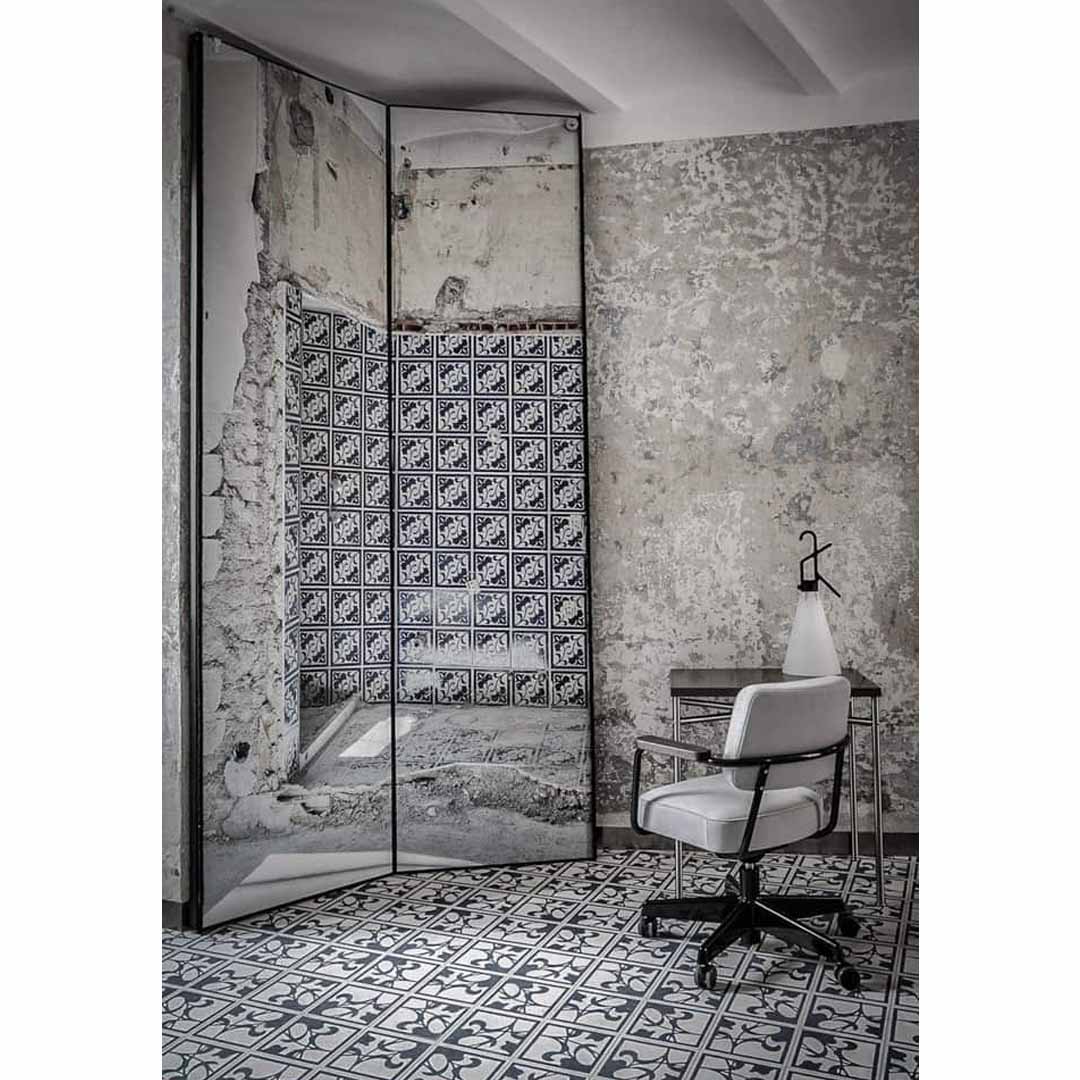
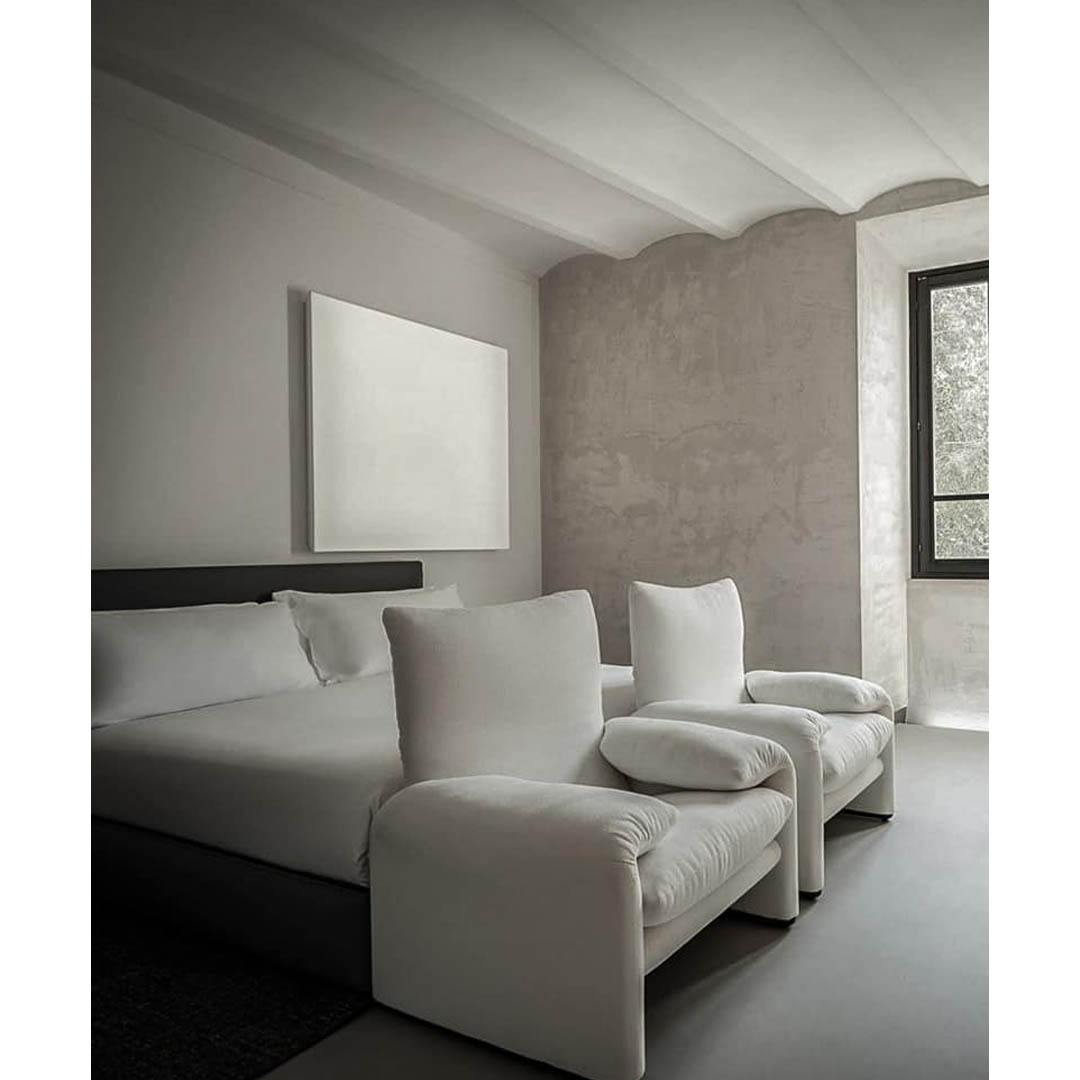
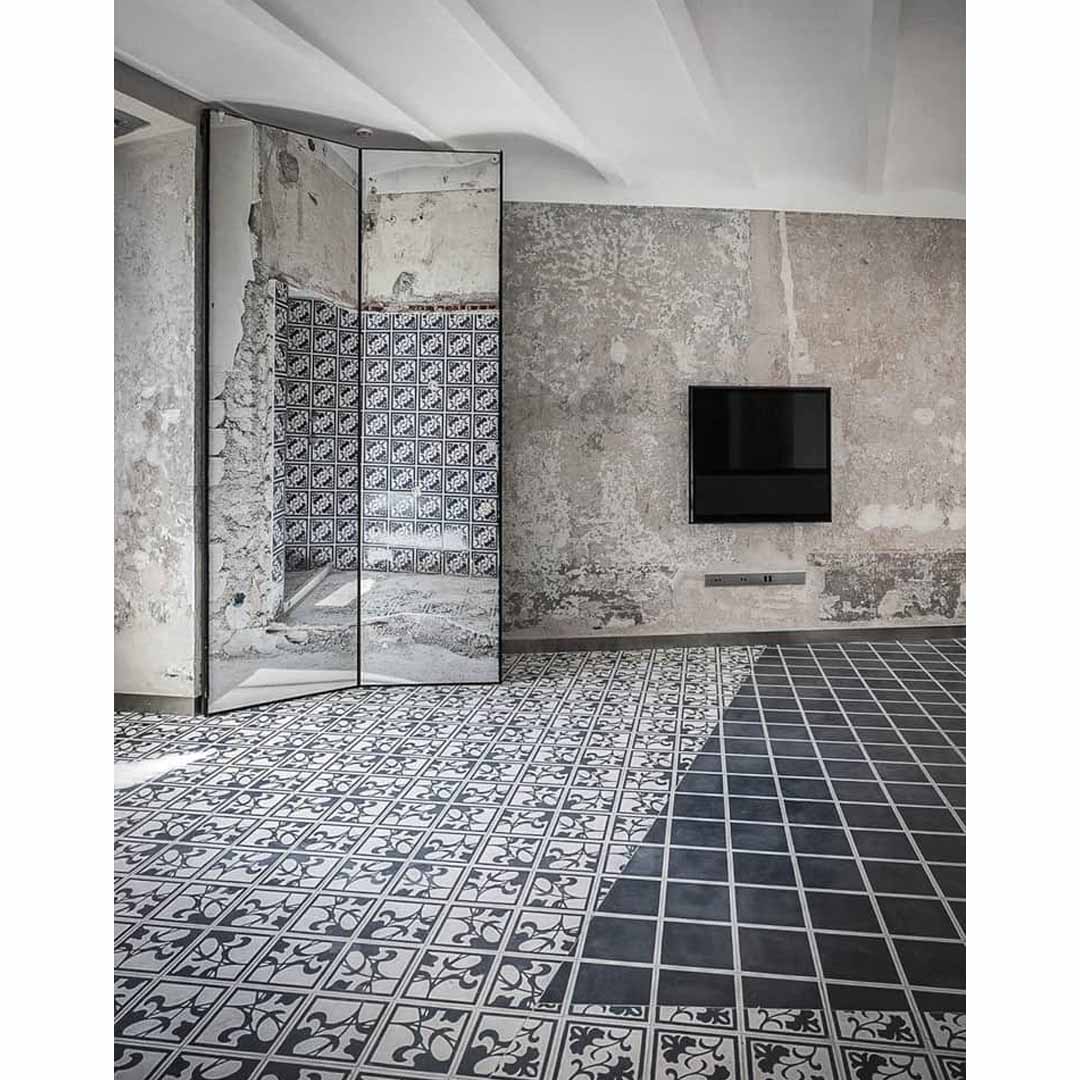
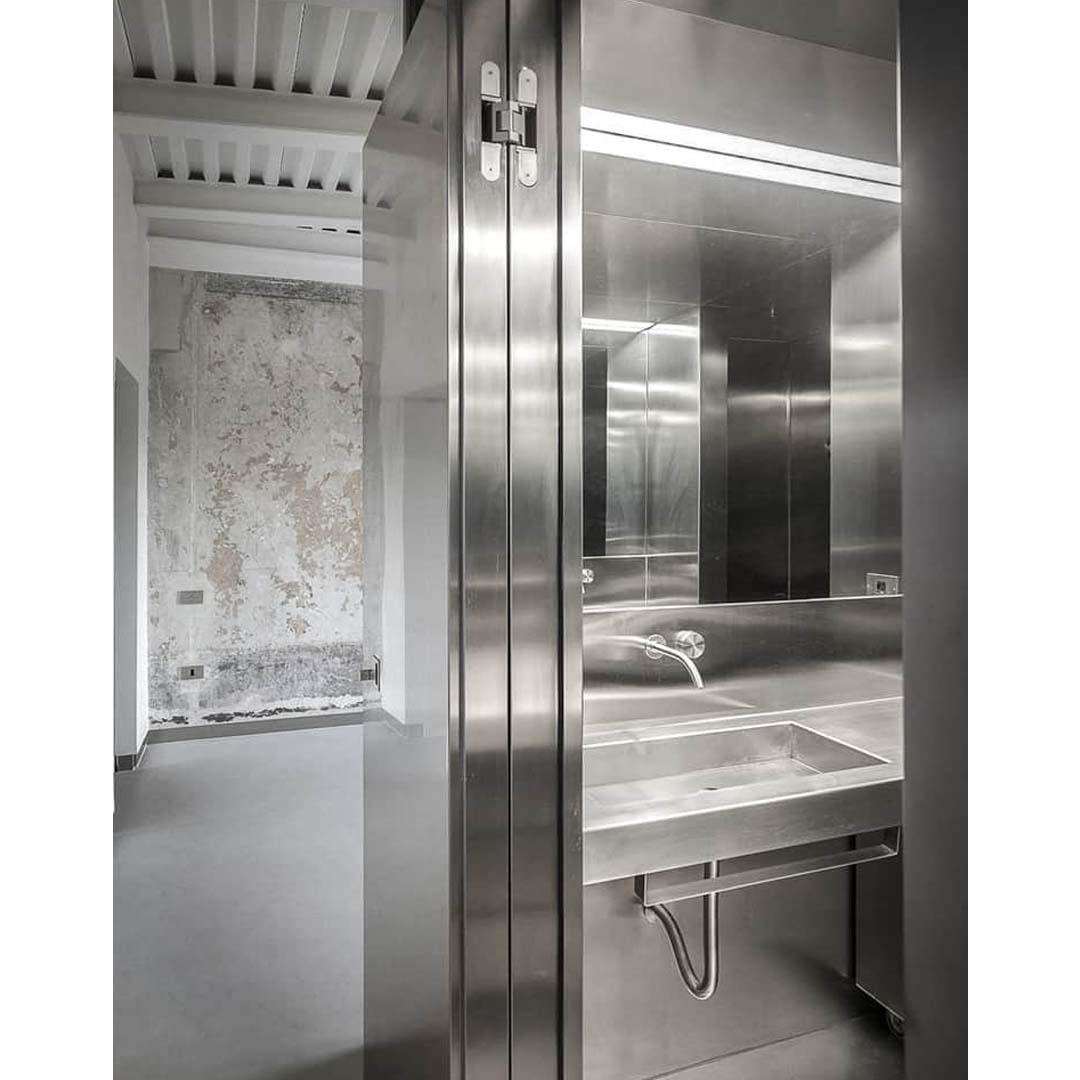
Photo: Roland Halbe, Fondazione Alda Fendi Esperimenti